What Working with Our Edison Township Crew in Metuchen Looks Like
When the call from Metuchen comes in, the goal is fastest-possible source-control plus right-sized equipment dispatch. The dispatcher captures the loss type (water vs fire vs sewage vs storm), the severity (a sink overflow vs a basement filling), and the access (gate codes, building manager, COIs). The crew is moving inside 10 minutes of the call ending — not 30, not 60.
Active emergency response — water actively intruding, fire just extinguished, sewage actively backing up — runs to a sub-hour on-site target across our service area. The drive from our Edison Township location to Metuchen is approximately 2 miles. Normal-traffic estimate: 10-20 minutes door-to-door. Pre-staged equipment during surge windows (winter freezes, named storms) keeps that arrival time consistent even on high-volume days.
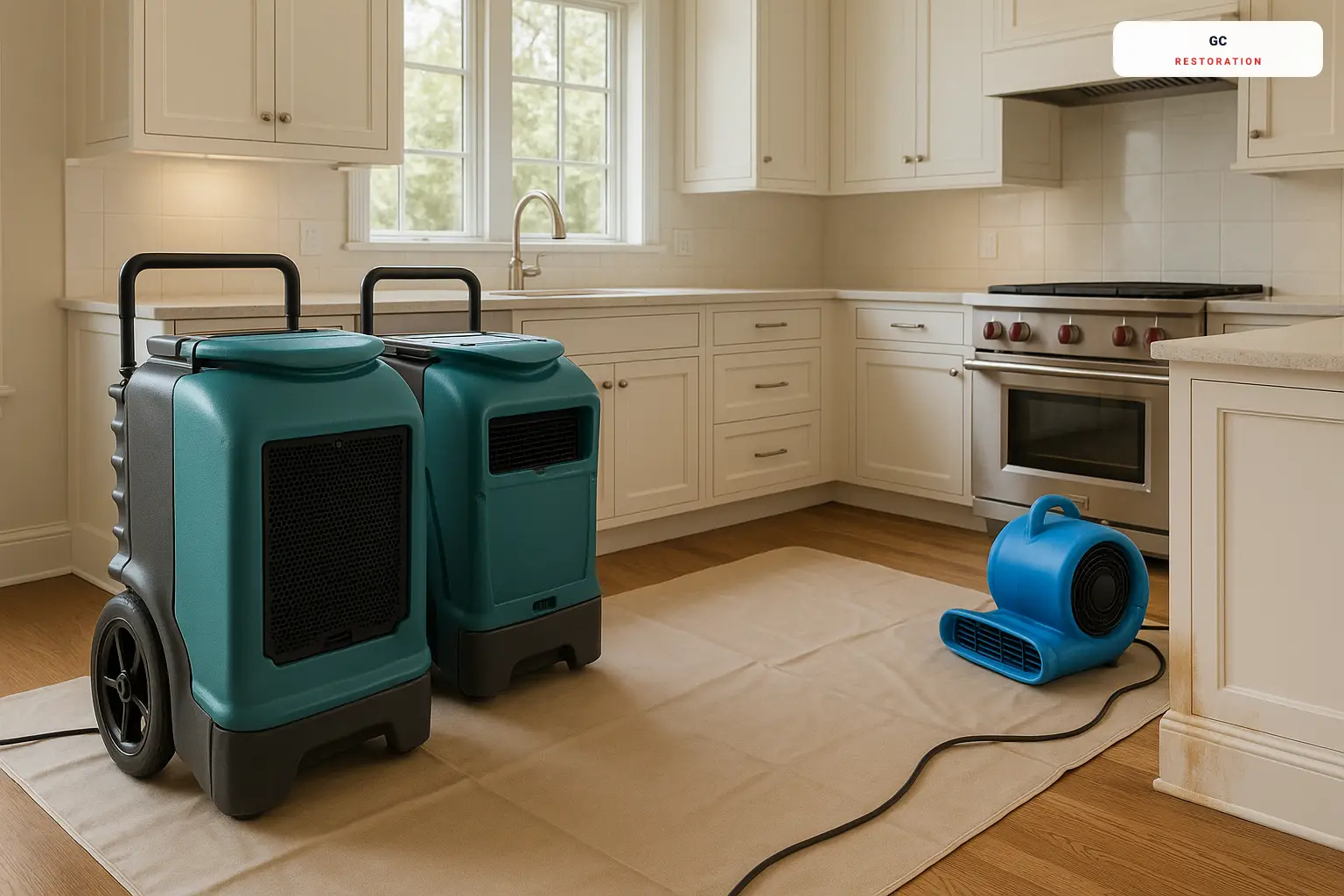
The on-site discipline matters more than the equipment list. Source-control before anything else. Photo + moisture documentation before equipment goes down. Equipment sized to the actual loss, not the truck capacity. Daily monitoring with logged readings until every monitored substrate hits dry-standard. Reconstruction on the back end with the same crew, scoped from the same documented Xactimate. End-to-end accountability through one team and one contract.
Direct billing and adjuster coordination in Middlesex County
Insurance documentation on Middlesex County losses gets handled the way the major carriers actually want it: photos of every wet substrate before equipment deploys, moisture readings logged daily against a labeled building diagram, line-item Xactimate for both mitigation phase and reconstruction phase, and a written cause-of-loss narrative that frames the event correctly for the policy. Direct carrier billing once authorization is on file means you are not floating mitigation costs while the claim works through adjusting.